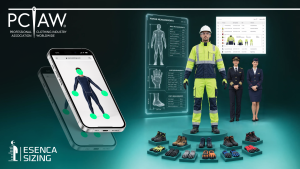
The PCIAW® Round Table on Defence and Security Uniforms and Inclusivity, convened on 2nd October 2025, brought together defence personnel, manufacturers, standards bodies, and advocacy groups to confront a critical, systemic issue: the inadequate provision of protective clothing and body armour for diverse workforces, particularly women.
The stark consensus was that the current reliance on “unisex” equipment is not just a matter of discomfort, but a measurable operational and safety deficit that undermines global defence capability and recruitment efforts.
Women in Defence & Security Forces Have Measurable Safety Deficit in Body Armour
Participants argued that the term “unisex” in military procurement masks the fundamental reality that equipment is overwhelmingly designed for the male anatomy. This has severe safety implications.
Analysis revealed that women wearing standard-issue Small Arms Protective Insert (SAPI) plates may experience up to 7% less ballistic coverage in angled shot scenarios. This is due to the geometric reality that flat ballistic plates project away from the female torso, creating exposed areas.
Alarmingly, approximately 70% of female personnel in one major European defence force are smaller than the standard one-size-fits-all hard armour plate currently issued.
Ill-Fitting Uniforms and PPE Limit Operational Effectiveness
The operational consequences are tangible, exemplified by the term “T-Rex arms” used by military personnel to describe the restricted range of motion caused by improperly fitted body armour, which directly impedes weapon handling.
Furthermore, research shows that in 90% of cases among female soldiers, ballistic plates sit too low. This often leads to personnel loosening vests to relieve pressure on the chest, causing the entire system to drop.
This results in shoulder and back injuries and, crucially, means the vest does not remain tight to the body during movement. Long-term wear is even causing permanent scarring and friction burns, injuries deemed unacceptable under basic health and safety laws.
A Lack of Defence Focused Inclusive PPE Standards
A critical gap in protection standards was identified: while NIJ standards exist for ballistic plates, there are currently no established testing standards for female-specific body armour, including vital side-angle protection.
This creates a circular dependency where procuring agencies demand verification to non-existent standards. Nevertheless, the industry is innovating. Collaborations have led to the creation of three new, freely available test methods designed to quantify comfort and mobility, previously considered subjective.
These include the Lower Costal Bending Test and the Double Curvature Compression Test (dubbed the “Pringles test”), which assesses how armour deforms to saddle-form body contours.
Adoption of Inclusive PPE Standards Should Not Be Voluntary
Beyond ballistics, failures in soft uniform items were also highlighted. Fire-retardant (FR) sports bras are often unstructured “sleeping bras” that lack adequate support for vigorous activity.
Operational personnel also raised the need for systems that accommodate full physiological requirements, including materials that account for hormonal fluctuations and menopausal symptoms.
While the introduction of British Standard BS 30417 for the Provision of Inclusive PPE provides excellent guidance, SecurityWomen stressed that voluntary adoption is insufficient when safety is at risk; regulation and enforcement may be required.
PCIAW® Round Table on Defence & Security Uniforms
Crucially, the Round Table found that solutions developed for female personnel often resolve problems for all service members. Improvements in vest fit, reduced weight, enhanced breathability, and better thermoregulation are universal advantages.
The argument against inclusive provision as “too difficult” or “too expensive” is therefore entirely unfounded when considering the whole-system benefits. Ultimately, inclusive equipment provision is a fundamental operational necessity.
The decisive message from the PCIAW® Round Table is that sustained commitment from the supply chain, procurement bodies, and regulatory agencies is essential to ensure every serving individual is adequately and safely equipped.