The recent PCIAW® Round Table, “Protecting the Emergency Services with Blue Light Uniforms,” held on 4th September 2025, brought together a diverse group of stakeholders to address the critical challenges facing uniform provision for emergency services.
This inaugural session united industry experts, end-users, procurement specialists, and technology providers to confront the urgent need for change in an industry struggling to keep pace with modern realities.
A central theme that emerged was the stark truth that the “one-size-fits-all” approach to PPE is not only outdated but also potentially dangerous.
Workforces Struggle to Access Fit-For-Form Uniforms
The scale of the problem is highlighted by dramatic shifts in workforce demographics. The West Midlands Ambulance Service, for example, has seen its workforce change from 70% male and 30% female a decade ago, to 65% female and 35% male in 2025. This demographic shift is not being met with appropriate changes in PPE provision.
An alarming finding from a PCIAW® sizing event with Women in the Fire Service UK revealed that 20% of the female firefighters measured were smaller than the smallest available structural fire kit. This means one in five may be operating with ill-fitting equipment that could compromise their safety.
Diversity in Workforces Must Be Considered in Blue Light Uniforms
The issue extends beyond gender to a broader picture of diversity. Modern emergency services must accommodate various religious and cultural needs, including head coverings compatible with helmets, modest clothing options, and flexible uniform policies.
The traditional method of simply scaling down male designs has proven fundamentally flawed. The session emphasised the need to move away from binary categories and toward “fit-for-form” solutions that acknowledge the full spectrum of body shapes and sizes.
Outdated Standards Are a Barrier and Technology Offers a Solution
A significant concern is the “standards gap,” with many current specifications being woefully outdated. For instance, public sector ambulance services are using specifications that are approximately 15 years old. Glove testing protocols use a smallest hand size that is too large for 86% of women’s hands, and helmet standards are based on measurements from just six individuals from decades ago.
Additionally, high-visibility clothing standards focus on garment size rather than the percentage of body coverage, which can force smaller personnel into ill-fitting, larger garments that compromise both safety and operational effectiveness.
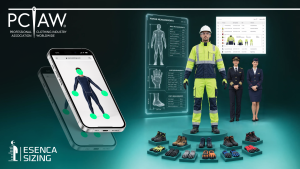
Fortunately, technology offers a path forward. Digital measurement solutions provide accurate and rapid data collection for body, hand, and foot measurements, with a precision of ±1mm.
This technology is gender-agnostic and could enable annual measurement updates, which is crucial as personnel body shapes change throughout their careers. These tools can address the fundamental challenges of traditional sizing systems that relied on outdated data.
Procurement Must Drive Change and Prioritise Ergonomic Fit-For-Form
Procurement reform is also a key part of the solution. Some emergency services contracts are still awarded based on the lowest price, which stifles innovation and optimal product development.
However, a shift from “most economically advantageous tender” to “most advantageous tender” provides an opportunity for a broader value assessment, though its effectiveness depends on procurement teams limiting the price weighting to 25-30% of the evaluation criteria.
The path forward requires embracing data-driven decision-making, technological innovation, and user-centred design principles. This collaborative approach, as demonstrated by the round table, is vital for creating tangible, value-adding outcomes that benefit everyone, from frontline personnel to the communities they serve.
The lives of emergency services personnel depend on getting this right.